

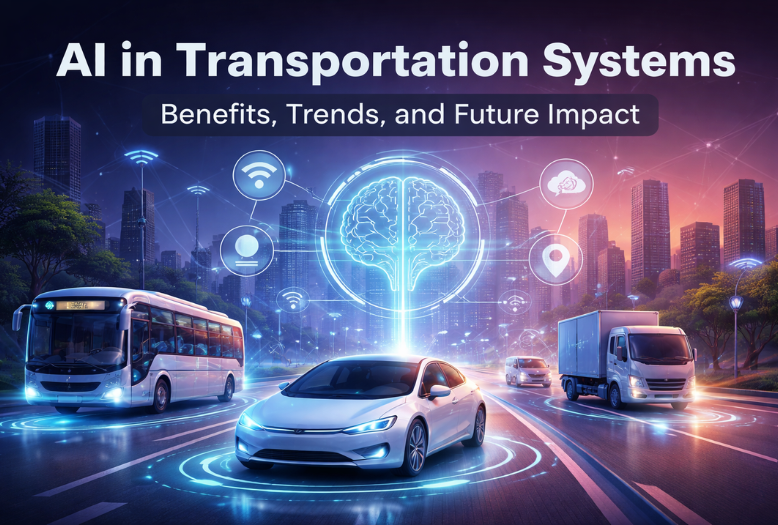
AI is changing a lot of industries, and transportation is one of the ones that is changing the most. AI is making cities smarter, safer, and more efficient by powering things like self-driving cars and smart traffic systems. AI-powered solutions are also being used by businesses in mobility platforms like ride-hailing services and taxi apps.
In order to improve customer experiences, optimize driver performance, and improve navigation, companies creating taxi booking apps are now incorporating AI technologies. In order to launch their platforms more quickly, entrepreneurs venturing into the ride-hailing sector frequently employ an Uber Clone solution.
This article examines emerging trends, the advantages of AI, how it is changing transportation systems, and how it will affect global mobility in the future.
Understanding AI in Transportation
Artificial Intelligence in transportation refers to the use of advanced algorithms, machine learning, and data analytics to improve transportation systems. Additionally, it helps optimize traffic flow, enhance safety, and support smarter mobility solutions. Furthermore, AI enables vehicles, traffic systems, and mobility platforms to analyze data, predict patterns, and make intelligent decisions.
AI-powered transportation systems collect data from several sources such as:
- GPS systems
- Traffic cameras
- Mobile applications
- Sensors in vehicles
- Ride-hailing platforms
As a result, this data helps optimize routes, reduce traffic congestion, and improve passenger safety.
For example, modern Taxi Apps use AI to calculate estimated arrival times, suggest the fastest routes, and match passengers with nearby drivers.
The Role of AI in Taxi Booking Platforms
As a result, the rise of digital mobility platforms has made AI a crucial component of ride-hailing technology. Therefore, businesses launching a Taxi Booking App often rely on AI to automate key processes.
Smart Ride Matching
In addition, AI algorithms analyze location data to match riders with the nearest drivers. This increases productivity and decreases wait times.
Dynamic Pricing
For example, ride-hailing services use AI to adjust fares based on demand, traffic, and weather conditions. This model helps drivers earn more during peak hours.
Route Optimization
Furthermore, AI-powered navigation systems identify the fastest routes using real-time traffic data.
Fraud Detection
- As a result, AI can detect unusual booking behavior or suspicious transactions, improving platform security.
- Many startups entering the mobility market adopt an Uber Clone to quickly deploy these AI-powered capabilities without building everything from scratch.
Key Benefits of AI in Transportation Systems

1. Improved Traffic Management
- AI systems analyze traffic patterns and control traffic signals accordingly. This reduces congestion and improves road efficiency.
- Smart cities use AI-powered traffic management systems that automatically adjust signal timings during heavy traffic conditions.
2. Enhanced Safety
- AI technologies can significantly reduce road accidents.
- Advanced driver assistance systems (ADAS) use AI to detect potential collisions and warn drivers.
- In addition, self-driving vehicles rely on AI sensors and cameras to monitor the road environment.
- In addition, these systems help reduce human error, which causes the majority of road accidents worldwide.
3. Efficient Ride-Hailing Services
- Additionally, AI helps ride-hailing platforms operate more efficiently.
- Modern Taxi Apps use AI to predict demand and position drivers in high-demand areas. Consequently, this ensures faster pickups and improves driver utilization.
4. Cost Reduction
Transportation companies can reduce operational costs by using AI automation.
For example:
- In addition, optimized routes reduce fuel consumption.
- As a result, predictive maintenance prevents vehicle breakdowns.
- Additionally, automated dispatch systems reduce manual work.
Businesses using an Uber Clone platform can implement these features quickly.
5. Better Customer Experience
AI enhances user experience by offering personalized services.
A smart Taxi Booking App can:
- Recommend preferred routes
- Provide accurate fare estimates
- Suggest ride options based on user preferences
This improves user satisfaction and increases customer retention.
AI Technologies Transforming Transportation
Several advanced technologies are driving the adoption of AI in transportation. Moreover, in addition, as a result, consequently, for instance, therefore, and furthermore.
Machine Learning
- Additionally, machine learning algorithms analyze transportation data to identify patterns and predict demand.
- In addition, ride-hailing platforms use machine learning to forecast peak ride hours.
Computer Vision
- As a result, computer vision allows vehicles to recognize objects, pedestrians, and road signs more effectively.
- In fact, self-driving cars depend heavily on computer vision to navigate roads safely.
Natural Language Processing
- AI systems can interact with users through voice commands and chatbots.
- Tools such as Uber duck AI demonstrate how voice synthesis technology can improve customer interactions in mobility platforms.
For example, voice-based ride booking could become common in future Taxi Apps.
Predictive Analytics
- Additionally, predictive analytics helps transportation companies forecast demand and optimize services.
- A Taxi Booking App can predict high-demand zones and allocate drivers accordingly.
Emerging Trends in AI Transportation

Autonomous Vehicles
- In particular, self-driving vehicles are one of the most exciting developments in AI transportation.
- Currently, companies like Tesla, Waymo, and Uber are investing heavily in autonomous vehicle technology.
- Furthermore, in the future, ride-hailing platforms powered by Uber Clone technology may gradually integrate autonomous taxis.
AI-Powered Smart Cities
Cities worldwide are integrating AI with transportation infrastructure.
Smart city transportation systems include:
- AI traffic lights
- Smart parking systems
- Real-time traffic monitoring
These technologies reduce congestion and improve mobility.
Voice Technology Integration
Voice AI tools such as Uberduck AI are expanding possibilities in mobility platforms.
Future ride-hailing platforms may allow passengers to:
- Book rides using voice commands
- Interact with AI assistants during trips
- Receive voice-based travel updates
Electric and AI Integration
- In addition, electric vehicles combined with AI technology are creating sustainable transportation systems.
- In addition, AI helps EV fleets optimize charging schedules and routes.
- Many Taxi Apps are now integrating electric vehicle fleets to reduce carbon emissions.
AI in Logistics and Delivery Transportation
AI is not only transforming passenger mobility but also logistics and delivery services.
Delivery companies use AI to:
- Plan efficient routes
- Track shipments in real time
- Predict delivery times
Companies building mobility ecosystems often integrate ride-hailing, delivery, and logistics services within a single Taxi Booking App platform.
Challenges of AI in Transportation
Despite its advantages, AI transportation systems face several challenges.
Data Privacy
AI platforms collect large amounts of user data. Companies must protect this data to maintain user trust.
Infrastructure Limitations
- Many regions still lack the infrastructure required for AI-powered transportation systems.
- Smart traffic systems require sensors, cameras, and reliable internet connectivity.
High Development Costs
Developing AI-powered mobility platforms can be expensive.
However, businesses can reduce costs by adopting ready-made solutions such as an Uber Clone.
Future Impact of AI in Transportation
The future of transportation will be heavily influenced by AI innovations.
Some expected developments include:
- Fully autonomous taxi fleets
- AI-powered public transportation systems
- Smart traffic infrastructure
- Personalized mobility services
AI will make transportation safer, faster, and more sustainable.
Ride-hailing businesses using advanced Taxi Apps will gain a competitive advantage by offering smarter mobility solutions.
Why Businesses Are Adopting Uber Clone Solutions
Launching a ride-hailing platform from scratch requires significant time and investment.
An Uber Clone offers a faster and cost-effective alternative.
Key advantages include:
- Pre-built rider and driver apps
- Admin dashboard for management
- Integrated payment systems
- AI-powered ride matching
Entrepreneurs can launch their own Taxi Booking App with customized features and branding.
The Growing Role of AI Tools in Mobility Platforms
AI tools like Uberduck AI demonstrate how AI technologies can enhance digital platforms.
Voice AI can improve communication between drivers, passengers, and support teams.
As mobility platforms evolve, AI will continue to introduce innovative features that improve transportation experiences.

Conclusion
Artificial Intelligence is revolutionizing transportation systems across the world. From smart traffic management to autonomous vehicles, AI technologies are reshaping the way people travel. Ride-hailing platforms, logistics companies, and smart cities are adopting AI to create safer and more efficient transportation networks. Businesses launching a Taxi Booking App or mobility platform are increasingly integrating AI capabilities to remain competitive.
Entrepreneurs looking to enter the mobility industry can leverage Uber Clone solutions to build scalable ride-hailing platforms quickly.
As AI continues to evolve, transportation systems will become smarter, greener, and more connected, paving the way for a truly intelligent mobility ecosystem.

